


Published April 15, 2026
Top 20 Gen Z Workplace Slang Terms: A Dictionary for Modern Professional Communication
Company Culture


Kass Monzon
Kass is the CEO and Co-Founder of Workbean, the Philippines’ first full-service employer branding agency. She builds bold, human-centered campaigns that help companies turn culture into a competitive advantage.
Introduction: The Great Value Shift of 2026
Ever sat in a Monday morning meeting, sipping your lukewarm coffee, only to hear a coworker say a project was “giving mid” or that they’re “locked in” for the afternoon? If you felt a sudden urge to check if you accidentally walked into a high school cafeteria instead of a corporate office, you’re not alone. The professional world is currently going through a linguistic shift.
As Gen Z—those born between the late 1990s and early 2010s—marches into the workforce, they aren’t just bringing their tech skills and reusable water bottles; they’re bringing a whole new vocabulary. Understanding Gen Z workplace slang is no longer just a nice skill to have for managers; it’s essential for modern professional communication and team cohesion. According to recent demographic shifts, Gen Z is expected to make up 30% of the workforce by 2030.
This guide isn’t about forcing you to talk like a teenager. It’s about understanding the vibe of the modern office. Moving beyond stiff corporate speak helps foster an inclusive, authentic company culture where everyone feels heard. Let’s dive into the dictionary that will help you navigate the future of work.
Why Gen Z Language Matters in the Modern Office
You might be wondering, “Why can’t we just stick to 'synergy' and 'moving the needle'?” The truth is, language is a reflection of values. For Gen Z, the traditional corporate hierarchy feels outdated. They prefer lowercase professional communication, a style that is more relaxed, direct, and human.
The Impact on Employer Branding
Companies that refuse to adapt often see a hit to their employer branding. When a company’s internal language feels like a dusty 1990s manual, it signals to younger talent that the culture might be rigid or slow to innovate. On the flip side, embracing modern vernacular (in the right context) shows that a company values employee engagement and is culturally aware.
Psychological Safety and Trust
Speaking the same language, even if you don't use the slang yourself, builds psychological safety. When a Gen Z employee says they are “cooked” and you respond with empathy rather than confusion, you are building a bridge of trust. Research shows that employees who feel they can be their authentic selves at work are 50% more productive.
As the experts at Workbean point out, a strong Employee Value Proposition (EVP) is about more than just a paycheck; it’s about the cultural unspoken contract between an employer and an employee. Language is a huge part of that contract.
The Gen Z Dictionary: 20 Essential Terms for Professionals
To make this easy, we’ve broken these down into three categories: Authenticity, Productivity, and Social Dynamics.
Group 1: Professional Authenticity & Feedback
1. No Cap / Keeping it 100
What it means: Total honesty; no lying.
Workplace use: “No cap, that presentation was the best one I’ve seen all year.” It’s about establishing transparency in meetings.
2. Bet
What it means: “Yes,” “I agree,” or “Challenge accepted.”
Workplace use: If a manager asks, “Can you get this report done by 5 PM?” and the employee responds with “Bet,” they are saying “Understood, I’m on it.”
3. Main Character Energy
What it means: Confidence; acting like the lead in a movie.
Workplace use: When someone takes initiative on a difficult project or leads a pitch with total authority, they are radiating main character energy.
4. Real
What it means: I relate to that; I agree with the struggle.
Workplace use: When someone complains about the Wi-Fi being slow, a simple “Real” from a coworker acknowledges the shared frustration.
5. Period (or Periodt)
What it means: End of discussion; that’s the final truth.
Workplace use: “We need to prioritize employee mental health, period.”
Group 2: Productivity & Work Ethic
6. Grindset
What it means: A mindset focused entirely on work and “the grind.”
Workplace use: Often used ironically now, as Gen Z tends to favor work-life balance over the hustle culture of previous generations.
7. Quiet Quitting
What it means: Doing exactly what your job description requires, no more, no less, to avoid burnout.
Workplace use: This term sparked a global conversation about remote work culture and boundaries.
8. Locked In
What it means: Extreme focus; being “in the zone.”
Workplace use: “Don’t disturb me for the next two hours, I’m locked in on this coding task.”
9. Cooked
What it means: Exhausted, overwhelmed, or knowing a project is destined to fail.
Workplace use: “After ten back-to-back meetings, I am absolutely cooked.”
10. Delulu
What it means: Delusional (usually in an optimistic way).
Workplace use: “I’m being a bit delulu thinking I can finish this 40-page deck by noon, but I’m gonna try.”
11. Side Quest
What it means: A task that is unrelated to your main goal but takes up time.
Workplace use: “I started cleaning my inbox, but I ended up on a side quest researching old invoices.”
12. Brain Rot
What it means: The feeling of your brain becoming mush after consuming too much low-quality digital content or staring at screens too long.
Workplace use: “I've been staring at spreadsheets so long I've got total brain rot.”
Group 3: Office Social Dynamics
13. Vibe Check
What it means: Assessing the energy or mood of a person or situation.
Workplace use: Before starting a high-stakes meeting, a leader might do a “vibe check” to see if the team is stressed or excited.
14. Slay
What it means: To do something exceptionally well.
Workplace use: “You absolutely slayed that keynote.” It’s a high-tier compliment for a job well done.
15. Gatekeeping
What it means: Intentionally withholding information or resources to maintain power.
Workplace use: Gen Z values diversity and inclusion, so “gatekeeping” information is seen as a major red flag in company culture.
16. Tea
What it means: Gossip or the inside scoop.
Workplace use: “What’s the tea on the new office move?” (Used carefully, of course!).
17. Ghosting
What it means: Breaking off all contact without explanation.
Workplace use: Most common in hiring, where candidates or recruiters stop responding.
18. Understood the Assignment
What it means: Doing exactly what was needed, usually with extra flair.
Workplace use: “The marketing team really understood the assignment with this new campaign.”
19. Roman Empire
What it means: Something you think about constantly.
Workplace use: “The way we lost that client last year is my Roman Empire.”
20. Soft Launch
What it means: A subtle or partial reveal of something before the official announcement.
Workplace use: “We’re soft-launching the new internal portal to the HR team first.”
The Dos and Don’ts of Using Slang as a Manager
We’ve all seen it: a manager tries to use “lit” or “on fleek” (terms that are already ancient) in a desperate attempt to be cool. It usually ends up being ‘cringe. To avoid the fellow kids trope, follow these simple rules.
Context is Everything
There is a time and a place. Using “Bet” in a Slack DM is perfectly fine. Using it while presenting a quarterly financial report to the Board of Directors? Probably not. Research into modern professional communication suggests that matching the medium to the message is the key to authority.
The Fine Line Between Relatable and Cringe
Cringe is the ultimate Gen Z insult. It happens when you try too hard. If a word doesn't feel natural in your mouth, don't say it. The goal is to understand your team, not necessarily to imitate them. Authenticity is the cornerstone of a healthy EVP.
Bridging the Gap: Tips for Multi-Generational Collaboration
It's not just on the old guard to learn new tricks; it’s about a two-way street of respect.
- For Boomers and Gen X: Don't dismiss slang as lazy. Often, these terms are shorthand for complex emotional states (like cooked vs I am experiencing the physiological and psychological symptoms of burnout).
- For Gen Z: Be aware that some terms can be misinterpreted. “No cap” might sound like gibberish to a client who graduated in 1980.
Recommendation: Consider creating a Shared Dictionary in your company’s Notion or Slack. This encourages transparency and makes the learning process fun rather than forced.
Why You Should Trust Us
This guide was authored and reviewed by Kass Monzon, CEO and Co-Founder, alongside Neil Rojas, Head of Consulting and Co-Founder at Workbean, the Philippines' first full-service employer branding agency. We have spent years helping organizations across industries uncover what truly drives their people, turning culture into a competitive advantage through bold, human-centered EVP and employer brand strategies.
At Workbean, our team has partnered with some of the country's top employers to research and design authentic employee value propositions (EVPs) that boost engagement, strengthen retention, and attract high-performing talent. We've conducted hundreds of hours of interviews and focus groups, benchmarked employer brands across Southeast Asia, and refined data-driven frameworks for defining the "Give vs. Get" balance that sits at the heart of every EVP.
Like all Workbean content, this guide was created with full editorial independence. Our goal is not to sell, but to share evidence-based insights from our first-hand experience in EVP research, talent strategy, and workplace culture, so you can build an employer brand people love!
Conclusion: The Future of Professional Communication
Language is never static. Just as the “thees” and “thous” of Shakespeare gave way to the “telegrams” of the 1920s and the “synergy” of the 1990s, Gen Z slang is simply the next evolution of human connection. By embracing these terms, we aren't just learning new words; we are learning to value transparency, and authenticity in the workplace.
As the workforce continues to evolve, staying “locked in” on these cultural shifts will ensure your team remains cohesive and your company culture stays “slay.”
Is your leadership team ready for the next generation? Download our Guide to Gen Z Retention or subscribe to our newsletter for more modern management tips.
FAQs:
Find the answer to commonly asked questions
What does "it’s giving" mean in a professional context?
Is Gen Z slang unprofessional for client-facing roles?
How do I tell a Gen Z employee their language is too casual?
What is the difference between "Gucci" and "Mid" regarding project quality?
More interesting reads


In this article, Workbean’s co-founder, Neil Rojas explores the "Philippine Culture Trap"—why Philippine organizations struggle to accurately read their own internal culture and how structural, societal, and individual dynamics shape workplace reality.
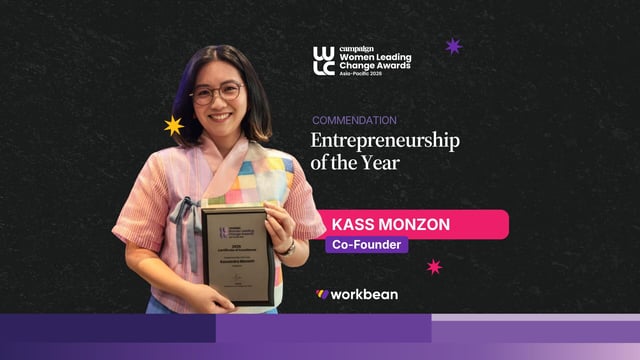
Workbean Co-Founder & CEO Kassandra Monzon earned a Commendation for Entrepreneurship of the Year at Campaign Asia-Pacific's Women Leading Change Awards (WLCA) Asia 2026. Here is how Workbean is reshaping employer branding in the Philippines.

Discover how 15 global and Philippine accounts master #CareerTok, and see why partnering with Workbean helps companies craft authentic, cringe-free short-form video strategies that attract top modern talent.

Ready to uncover your employer brand’s unique voice? Let’s talk →
- Sitemap
- Reach out
- Project Inquiry
Join Our Team


- Singapore
160 Robinson Road, #14-04 Singapore Business Federation Centre, 068914 Singapore
- Philippines
Unit 4D, 134, Building Jupiter, Makati City, 1209 Metro Manila