


Published October 19, 2026
The Philippine Culture Trap
Company Culture


Neil Rojas
Neil is the Co-Founder and Head of Consulting at Workbean, the Philippines’ first full-service employer branding agency. He leads the building of bold, human-centered employer value proposition (EVP) projects that help companies turn culture into a competitive advantage.
In Philippine business today, significant effort and resources are directed toward shaping workplace identity and employee experience. Yet, a persistent gap remains between the culture leadership believes exists and the behavioral reality that actually shapes how people work.
This analysis explores why organizations struggle to diagnose their true workplace dynamics—a phenomenon termed the Philippine Culture Trap. By examining societal norms, organizational practices, and individual behaviors, we unpack what prevents authentic alignment and how companies can better understand their people.
Why Philippine Organizations Cannot Read Their Own Culture and What It Costs Them
Culture is one of the most invested-in ideas in Philippine business today. Organizations spend real time and real money trying to understand it, shape it, and communicate it. And yet, for all that investment, a persistent gap remains: the culture a company believes it has, and the culture that actually shapes how people think and work are often not the same thing.
This is not a failure of effort or sincerity. Most leaders genuinely want a healthy, honest workplace. The problem is structural. The signals coming back to organizations from their people, through surveys, through town halls, through the way people behave in meetings, have already been filtered and adjusted before they arrive. What leadership hears is not always what is actually happening.
This analysis explains why. It draws on peer-reviewed research in cultural psychology, organizational behavior, and the science of how people fit into the organizations they work for. It connects these bodies of research to the specific conditions of the Philippine context, which, I argue, make this problem harder here than in most places.
I call it the Philippine Culture Trap. It is not a criticism of any organization or leader. It is an attempt to name something that has been operating quietly underneath the surface of Philippine organizational life for a long time.
Layer 1: The Society
Filipinos are raised to read the room and act accordingly
Before we talk about organizations, we have to talk about the country.
The Philippines is what researchers call a tight culture. Tight cultures have strong, clear social norms, unwritten rules about how people should behave, and a low tolerance for anyone who breaks those rules. Loose cultures give people more freedom to act differently without consequence.
Gelfand et al. measured this across 33 countries using a six-item scale that assessed how strong, clear, and consistently enforced social norms were in each nation. Scores ranged from 1.6 in Ukraine, the loosest country in the study, to 12.3 in Pakistan, the tightest. The United States scored 5.1, comfortably in the mid-loose range. The countries closest to the Philippines in terms of history, religion, colonial experience, and geography scored among the highest: Malaysia at 11.8, India at 11.0, Singapore at 10.4, South Korea at 10.0.
The Philippines was not included in the study. But the conditions that drive tightness, including dense populations, centuries of colonial rule, strong religious institutions, and a culture built around group survival rather than individual expression, are deeply present here. There is every reason to believe the Philippines sits at the tighter end of the scale.
What does this mean in practice? It means Filipinos grow up learning, very early, that fitting in is safer than standing out. That reading the room matters. That saying what the situation calls for, rather than what you actually think, is not dishonesty. It is social intelligence. In many cases, it is survival.
The research also shows that people in tight cultures develop specific habits of mind: they are more cautious, more dutiful, better at self-control, and highly skilled at adjusting their behavior to meet expectations. These are not bad qualities. But they do mean that by the time a Filipino employee walks into a workplace, they have already spent decades practicing the skill of performing alignment. Of looking like they fit, whether they do or not.
Layer 2: The Organization
Stating a value and building one are two different things
Organizations do not create this problem. But without realizing it, they often amplify it.
Research on organizational culture makes a distinction that sounds simple but carries enormous weight: the difference between values and norms. Values are what an organization says it stands for. Norms are what people actually do, day to day, without being told to. Graham, Grennan, Harvey, and Rajgopal studied this across hundreds of companies and found that stated values, on their own, are weak predictors of a company's performance. What predicts outcomes is norms, the lived behavioral reality of how things actually work.
The gap between values and norms is not a sign of bad leadership. It is a sign that values, once declared, need to be actively built into an organization, through decisions, through the behaviors that get recognized, through the moments when a principle is tested and holds. That work is harder than writing values down. And it is easy to underestimate how much of it still needs to be done.
Netflix understood this early. Their well-known culture framework did not just list values. It defined them in detail: what a value looks like when someone lives it, what it looks like when someone does not, and what it means for how decisions get made. The value became a norm because the behavioral meaning was made explicit. Most organizations, not just in the Philippines, skip that step.
What happens when a value is declared but not fully defined? It becomes an open container. Anyone can pour meaning into it. And in a tight-culture environment, where people are already trained to read signals and behave accordingly, that undefined space tends to fill with whatever interpretation feels safest, rather than with the original intent.
Take Malasakit. In most Philippine companies, it appears on the values list because the intent behind it is genuine: real care, for each other and for the work. But without a clear definition of what Malasakit looks like in a difficult moment, when someone is struggling, when a project is failing, when pressure is high, it remains open. It can mean we take care of each other through hard times. Without that definition, it can also quietly become: we push through without complaint, because that is what caring looks like here.
Neither interpretation is wrong, exactly. Both are natural. That is precisely the problem. A value with no defined norms around it does not stay neutral. It gets shaped by the environment. And in a culture already built on conformity and deference, it tends to fill in the gaps in ways that reinforce silence over honesty.
Layer 3: The Individual
People stay, even when they should not
This is where the trap fully closes.
In most research on culture fit, there is an assumed release valve. If someone does not fit the organization they are in, the expectation is that they eventually leave. Kristof-Brown's foundational work on person-organization fit showed that misalignment reliably predicts lower satisfaction, less commitment, and higher intent to resign. The more recent work by Kristof-Brown, Schneider, and Su goes further: they examine what happens when misfits do not leave. When they stay, adapt, and learn to perform a sense of belonging they no longer actually feel.
In the Philippine context, leaving is hard. For two reasons that are specific to this country.
The first is relational. Filipino workplaces are not just employment arrangements. They become communities. People build genuine friendships. The team becomes a "barkada". After years together, leaving does not just mean finding a new job. It means walking away from people you actually care about. That is a much harder decision than it looks on a resignation letter. And it keeps people in place long after the professional fit has broken down.
It is important to be precise here. This relational anchoring is not the same as the tight-culture conformity described in Layer 1. Collectivism, the Filipino tendency to anchor identity and loyalty in the group, is a different force from tight-culture social pressure. Collectivism shapes who you belong to. Tightness shapes how freely you can behave within any given situation. A Filipino employee can feel genuine, deep loyalty to their team and, at the same time, feel unable to disagree with their manager in a meeting. Both forces push in the same direction: staying, complying, performing alignment. But they require different solutions. Treating them as the same thing will produce the wrong diagnosis.
The second reason is economic. Salaries in the Philippines, relative to the cost of living in Metro Manila and other urban centers, leave most employees very little financial cushion. Leaving a job without something already secured is a real risk for most people. And so they wait. They stay until something certain appears. Which, in practice, often means staying indefinitely.
The result is an employee who no longer fits but stays anyway. They adjust. Over time, they become skilled at performing a belonging they no longer feel, what the research calls resignation to misfit. Not quitting. Just accepting. And the energy spent keeping up that performance, looking engaged, sounding aligned, behaving as expected, is energy not going into the actual work. The organization does not see it. The person does not announce it. But it is quietly happening, across more people than most organizations would guess.
The Philippine Culture Trap
Philippine organizations are not misreading their culture because they are not paying attention. They are misreading it because every structural layer — the society, the organization, and the individual — is set up to produce confirmation rather than truth.
Tight-culture conformity teaches people to signal alignment before they ever enter a workplace. Values without defined norms are shaped by the environment, and in that environment, they tend to shift toward compliance. Relational bonds and economic pressure keep people in place long after the fit has broken down, performing a belonging they no longer feel. The organization hears what it wants to hear. Not because anyone is lying. But because the whole system is built that way.
This is the Philippine Culture Trap.
What This Means for Research and Practice
Understanding the Philippine Culture Trap does not require pessimism about Philippine organizations or the people who lead them. Most of what is described here is not malicious. It is structural. And structural problems, unlike individual ones, can be addressed systematically once they are properly named.
But naming them requires honesty about what standard diagnostic tools can and cannot capture in this context. An engagement survey administered in a tight-culture environment will collect tight-culture responses. A focus group without the right safeguards will surface the most fluent voices, not necessarily the most honest ones. Culture interventions built on that data will be well-designed responses to a partial picture.
The implication is not that culture research in the Philippines is impossible. It is that research methodology has to account for these layers explicitly. It has to be designed with the trap in mind: creating conditions where authentic voice can emerge rather than assuming it will, and distinguishing relational loyalty from genuine fit.
The culture of an organization is only as legible as the methodology used to read it. In the Philippine context, that methodology needs to work harder. And it needs to start by understanding why the standard approach falls short.
Ready to break through the culture trap, uncover authentic employee insights, and build a workplace brand rooted in truth? Reach out to Workbean today.
Workbean is the Philippines' leading creative employer branding agency. We consult, design, and implement employer branding strategies that help companies become the place people can't wait to work for.
More interesting reads

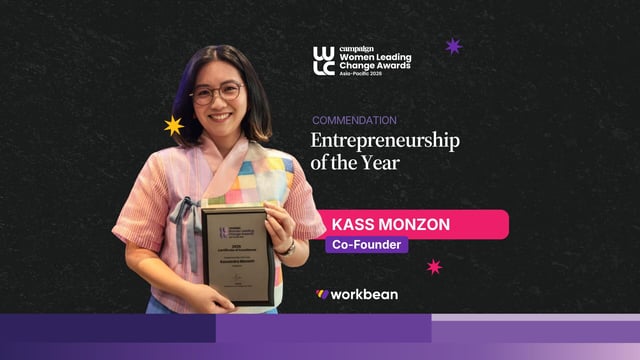
Workbean Co-Founder & CEO Kassandra Monzon earned a Commendation for Entrepreneurship of the Year at Campaign Asia-Pacific's Women Leading Change Awards (WLCA) Asia 2026. Here is how Workbean is reshaping employer branding in the Philippines.

Discover how 15 global and Philippine accounts master #CareerTok, and see why partnering with Workbean helps companies craft authentic, cringe-free short-form video strategies that attract top modern talent.

In a market where candidates live on social media, job ads shouldn't compete with product promos. Learn how a dedicated Facebook Careers Page—managed by Workbean—builds a high-volume talent pipeline in the Philippines.

Ready to uncover your employer brand’s unique voice? Let’s talk →
- Sitemap
- Reach out
- Project Inquiry
Join Our Team


- Singapore
160 Robinson Road, #14-04 Singapore Business Federation Centre, 068914 Singapore
- Philippines
Unit 4D, 134, Building Jupiter, Makati City, 1209 Metro Manila