


Published March 25, 2026
Top 5 Non-Monetary Perks Filipino Gen Z Candidates Rank Higher Than Salary in 2026
Company Culture
Talent Attraction


Kass Monzon
Kass is the CEO and Co-Founder of Workbean, the Philippines’ first full-service employer branding agency. She builds bold, human-centered campaigns that help companies turn culture into a competitive advantage.
Introduction: The Great Value Shift of 2026
For decades, the Recruitment Playbook in the Philippines was simple: if you wanted the best talent, you offered the highest bidder's salary. But as we step into 2026, that old strategy is gathering dust. In the bustling business hubs of Makati, and BGC, a new generation is rewriting the rules of engagement.
Filipino Gen Z candidates—now making up a massive chunk of the workforce—have reached a breaking point with the grind culture. They’ve realized that a high salary doesn't mean much if you're spending four hours a day stuck in EDSA traffic or if your stress levels are through the roof. Today, non-monetary perks for Filipino Gen Z are the new gold standard. Candidates are increasingly ranking peace of mind over pesos.
We are seeing a radical shift where the traditional paycheck is just the entry fee. To actually win the heart of a Gen Z candidate, companies must pivot toward what we at Workbean call a culture-first Employee Value Proposition (EVP). This isn't just about business; it’s about a Total Rewards model that treats employees as humans with lives, families, and mental health needs.
In this guide, we’ll dive into the five specific perks that are currently outperforming a fat paycheck in the 2026 Philippine job market.
1. Radical Flexibility: Hybrid 3.0 and Work from Anywhere (WFA)
If 2021 was the year of work from home, 2026 is the year of traffic-proof careers. In Metro Manila, where congestion has reached record highs post-pandemic, the ability to avoid the commute isn't just a perk, it’s a survival mechanism.
Beyond Basic Hybrid to Asynchronous Work
Generic hybrid setups (like the "3 days in, 2 days out" model) are now seen as outdated by Gen Z. The 2026 standard is Hybrid 3.0, which focuses on Asynchronous Work. This means it doesn’t matter when you do the work, as long as the output is there.
According to recent data, roughly 82% of Philippine businesses have adopted some form of hybrid work to stay competitive. For Gen Z, a mandatory office day feels like a pay cut because of the cost of gas, Grab fares, and, most importantly, the time tax of commuting.
Actionable Tip: If your role doesn't strictly require physical presence, offer a Work from Anywhere (WFA) month where employees can work from their provinces or a beach in Siargao without losing leave credits.
2. Holistic Well-being: Beyond Basic HMOs
For a long time, the only health benefit Filipinos cared about was the HMO card. But in 2026, Gen Z is looking at the fine print of well-being. They aren't just worried about physical illness; they are prioritizing psychological safety.
Why Mental Health Days are Non-Negotiable
While many graduates value open-door policies, a more alarming reality has emerged: 87% of Filipinos now report experiencing work-related mental health issues, a figure that significantly exceeds the global average. The 2026 candidate asks: "Does this company have a Well-being Coordinator?" or "Are there dedicated Recharge Rooms in the office?"
Mental health benefits are no longer just an add-on. Leading companies are now subsidizing therapy sessions and offering unplugged weekends where all internal communication servers are turned off. This shift recognizes that a burnt-out employee is an unproductive one, regardless of their salary.
For more information on the country's legal framework for mental health, you can refer to the Mental Health Act of the Philippines.
3. Hyper-Personalized Career Pathways & AI Upskilling
The old ten-year ladder is dead. Filipino Gen Zs are the generation of the "Internal Gig." They don't want to wait five years for a promotion; they want to learn five new skills in one year.
Skills over Pedigree: The Rise of the Internal Gig
In 2026, the most attractive companies are those that offer modular growth. This means allowing an employee in Marketing to spend 20% of their time helping the Product team, or providing access to high-level AI tools for upskilling.
Gen Z views stagnation as a risk. If a company offers a slightly lower salary but provides a $2,000 yearly stipend for certifications and access to a mentor-matching program, the Gen Z candidate will take that offer almost every time. They are investing in their future-proof selves.
4. Purpose-Driven Work and Green Benefits
The 2026 Filipino worker is deeply conscious of the world around them. With the Philippines being one of the most climate-vulnerable nations, Green benefits have moved from a CSR checkbox to a recruitment magnet.
Aligning CSR with Personal Values
Recent data shows that Filipino employees are no longer just asking for sustainability—they are demanding it. A significant 67% of local workers expressed deep concern over climate-related health and safety risks like heat stress and air pollution. This sense of employer responsibility has surged well past the global average of 44%, signaling that for Filipinos, climate action is a workplace safety issue.
What does this look like as a perk?
- Climate-Resilient Infrastructure: Ensuring office spaces are equipped to handle heat stress and provide clean air filtration.
- Eco-Mobility: Subsidized public transport passes or bike-to-work incentives to reduce individual carbon footprints.
- Purpose-Led Volunteering: Paid days off for reforestation or disaster relief, directly addressing the Philippines’ unique climate vulnerabilities.
5. Autonomy and Output-Based Performance
Micromanagement is the fastest way to lose a Gen Z employee in 2026. This generation values trust above all else. They want to be judged by the quality of their work, not the number of hours their status is Active on Slack.
Breaking the 8-to-5: The Death of Micromanagement
The 8-to-5 is a relic of the past. Gen Z prefers Output-Based Performance. If they can finish their tasks in six hours because they’ve mastered AI tools, they expect to be able to log off without being penalized.
This autonomy is a massive non-monetary perk. It signals that the company respects their time and intelligence. When you give a Filipino Gen Z candidate the keys to their own schedule, you gain a level of loyalty that a 10% raise simply cannot buy.
Why Salary Is No Longer the Only Hook
You might be wondering: Is money really that secondary? Well, let’s look at the Inflation Factor. In the Philippines, as the cost of living rises, a taxable base salary increase often gets eaten up by higher tax brackets and price hikes. However, de minimis benefits (small, non-taxable allowances for rice, laundry, or medical extensions) provide more real-world value.
Furthermore, the Gig Influence is real. Many Gen Zs have side hustles or freelance projects. They have learned that time is their most valuable asset. If a full-time job demands 60 hours a week for a high salary, they’d rather take a 40-hour week for less money so they can maintain their personal projects or side-hustle income.
Why You Should Trust Us
This guide was authored and reviewed by Kass Monzon, CEO and Co-Founder, alongside Neil Rojas, Head of Consulting and Co-Founder at Workbean, the Philippines' first full-service employer branding agency. We have spent years helping organizations across industries uncover what truly drives their people, turning culture into a competitive advantage through bold, human-centered EVP and employer brand strategies.
At Workbean, our team has partnered with some of the country's top employers to research and design authentic employee value propositions (EVPs) that boost engagement, strengthen retention, and attract high-performing talent. We've conducted hundreds of hours of interviews and focus groups, benchmarked employer brands across Southeast Asia, and refined data-driven frameworks for defining the "Give vs. Get" balance that sits at the heart of every EVP.
Like all Workbean content, this guide was created with full editorial independence. Our goal is not to sell, but to share evidence-based insights from our first-hand experience in EVP research, talent strategy, and workplace culture, so you can build an employer brand people love!
Conclusion
The landscape of 2026 requires more than just a competitive salary; it requires Malasakit (compassion). Filipino Gen Z candidates are looking for a workplace that feels like a community, not a factory.
Success in this era means integrating flexibility, well-being, and purpose into your company’s DNA. Companies that listen to what Gen Z actually values will thrive, while those stuck in 2019 "command and control" tactics will find themselves constantly replacing talent.
Is your benefits package stuck in the past? Don't let your best talent walk away. Schedule a culture consultation with our experts at Workbean today to see how you can transform your EVP into a talent magnet.
FAQs
Find the answer to commonly asked questions
What are the most in-demand non-monetary benefits in the Philippines for 2026?
How does flexibility impact Gen Z employee retention in Manila?
Do Filipino Gen Z candidates still care about 13th-month pay?
What is the total rewards approach in the Philippine recruitment context?
More interesting reads

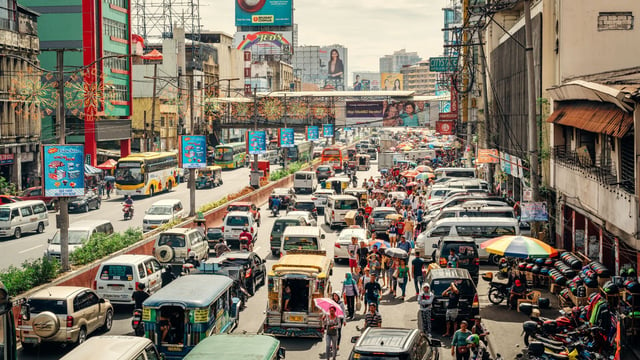
In this article, Workbean’s co-founder, Neil Rojas explores the "Philippine Culture Trap"—why Philippine organizations struggle to accurately read their own internal culture and how structural, societal, and individual dynamics shape workplace reality.
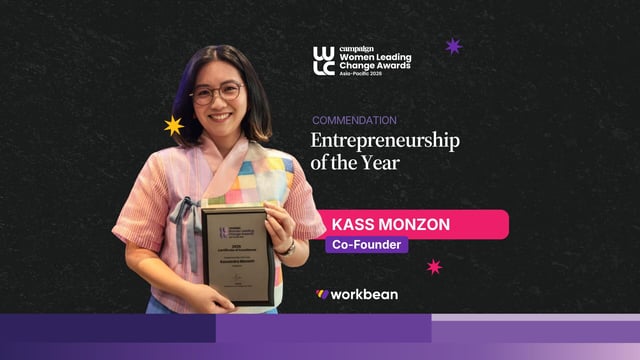
Workbean Co-Founder & CEO Kassandra Monzon earned a Commendation for Entrepreneurship of the Year at Campaign Asia-Pacific's Women Leading Change Awards (WLCA) Asia 2026. Here is how Workbean is reshaping employer branding in the Philippines.

Discover how 15 global and Philippine accounts master #CareerTok, and see why partnering with Workbean helps companies craft authentic, cringe-free short-form video strategies that attract top modern talent.

Ready to uncover your employer brand’s unique voice? Let’s talk →
- Sitemap
- Reach out
- Project Inquiry
Join Our Team


- Singapore
160 Robinson Road, #14-04 Singapore Business Federation Centre, 068914 Singapore
- Philippines
Unit 4D, 134, Building Jupiter, Makati City, 1209 Metro Manila