


Published November 23, 2026
The "New Hire Envy" Trap: Why Your Employer Brand Must Put Existing Teams First
Employee Value Proposition
Employer Branding


Alyza Ng
Alyza is a Junior Analyst at Workbean, the Philippines' first full-service employer branding agency. She uses data-driven insights and market research to help companies turn culture into a competitive advantage.
An Employee Value Proposition (EVP) breaks down when recruitment promises outpace internal reality. When companies offer new recruits higher starting pay and flashy sign-on bonuses while keeping tenured employees locked into capped merit raises, it triggers "New Hire Envy." This destroys trust, fuels disengagement, and pushes top performers out the door. According to Payscale's Flight Risk Report, new hires in inverted markets earn significantly more than tenured staff performing the exact same role. In the Philippines, WTW's Salary Budget Planning Survey reveals slowing annual raise budgets—even while live Jobstreet by SEEK Philippines ads openly advertise generous sign-on bonuses alongside competitive base pay.
When external hiring rates are visible to a disengaged team, that pay gap turns into a major recruitment liability. Mercer's Global Pay Transparency Survey projects that almost all job postings will soon list pay ranges, yet few employers have a complete transparency strategy ready. Running aggressive recruitment campaigns while global engagement remains low (Gallup) and local tenure remains short (Sprout Solutions) creates the Delivery Illusion: marketing an experience that internal operations fail to deliver.
Prioritizing existing teams over new recruits isn't just nice to have—it's a financial necessity for HR leaders, Total Rewards managers, and executives. As you review the insights below, keep in mind that equity research aligns directly with active job postings, and financial trade-offs can be easily calculated using standard replacement cost benchmarks.
Inside New Hire Envy: Pay Compression, Sign-On Cash, and Loyalty Penalties
New Hire Envy builds quietly when hiring speed overrides internal fairness. As Payscale's guide on pay compression explains, compression occurs when starting salaries for new hires get uncomfortably close to—or pass—what experienced team members earn. Key drivers include talent shortages, outdated salary surveys, broad job levels, minimum wage adjustments, and inflation.
Compensation data shows how fast trust breaks down when pay bands compress. According to SalaryCube's metrics, compression occurs when new hires enter near target midpoints while long-time staff sit below them. Gartner research cited by CompUp shows that a minority of employees feel fairly paid or believe pay is distributed equitably—a feeling made worse when internal promotions yield small raises while outside candidates negotiate higher starting pay.
Importantly, Payscale's Flight Risk Report notes that pay inversion varies by field. While roles with high market demand favor new recruits, specialized technical and senior roles continue to reward tenure. Using blanket assumptions across all departments will cause you to miss the exact roles where turnover risk is highest.
The gap between switching jobs and returning as a boomerang hire is equally telling. Payroll analyses from ADP reported by ApplyGOAT and MetaIntro, alongside data from TalentUp, show the general job-switcher premium has narrowed significantly. However, studies from Harvard Business Review and Visier cited by The Interview Guys and Nevada Employers Association show returning hires secure substantial pay increases and frequent management promotions compared to stayers. Capping internal raises while offering large market adjustments to returning hires teaches employees that resigning is the fastest way to grow.
Sign-on cash makes this perception worse. Peer-reviewed research based on Adams' Equity Theory in Emerald's leadership and recruitment studies shows that people judge fairness by comparing their effort and rewards against peers. Supporting this, SHRM research shows that ongoing salary investments deliver better long-term retention than one-time bonuses, while analyses from Power3 and Compackage warn that upfront cash for new hires without adjusting tenured pay creates instant resentment.
Regional Benchmarks: Why Compression Hits Harder Locally
Across the Philippines and Southeast Asia, modest annual salary budgets clash with aggressive hiring perks. According to WTW's Salary Budget Planning Survey, local salary increase budgets have steadily moderated, aligning with historical projections from WTW's prior report.
Local teams face pay compression from multiple angles. Even when regional budgets stay moderate compared to global benchmarks in Mercer's planning benchmark, minimum wage adjustments reported by Manila Bulletin narrow pay gaps at entry levels. Meanwhile, high demand for tech and specialized skills outpaces general pools (WTW Philippine sector data; Robert Walters Philippines), and recruitment firm Curran Daly's Salary Guide notes junior hires in key roles often start uncomfortably close to mid-level veterans.
Aggressive external ads make this gap obvious. Live Jobstreet by SEEK Philippines listings combine standard customer service base pay with sign-on bonuses, perks, and gadget giveaways. Postings for healthcare customer service,recruitment specialists, and remote patient schedulers showcase substantial upfront cash incentives. For tenured staff stretching income month to month, seeing a new recruit get a full month's salary bonus on day one creates immediate tension.
This disparity hits fragile local retention metrics head-on. In Sprout Solutions' Retention Playbook, data shows short employee tenure across Filipino workers. In the IT-BPM industry, IBPAP metrics compiled by CIB.O reveal high contact center turnover compared to Global In-House Centers (GICs). Leadership often misses these warning signs because, as Workbean Co-Founder Neil Rojas highlights in The Philippine Culture Trap, workplace norms around harmony prevent direct feedback from reaching executive desks during town halls. Employees rarely voice frustration publicly; instead, they stay polite, disengage quietly, and leave.
Pay Transparency, Quiet Quitting, and the Internal Mobility Blind Spot
Three major workforce trends make it impossible to hide New Hire Envy. First, pay transparency is bringing salary numbers into the open. Mercer's Global Pay Transparency Survey highlights the rapid rise of salary range disclosures in job ads. Mercer data cited by Mindkey reveals that most Gen Z employees discuss pay openly, and nearly half of job seekers skip ads lacking pay ranges. Yet internal readiness lags behind. That gap carries real turnover costs: Payscale research shows employees at transparent companies are significantly less likely to leave, whereas workers at opaque organizations are far more likely to job-hunt. Payscale data cited by Deel adds that employees who simply feel underpaid are much more likely to look elsewhere, even when their pay is competitive. As Robert Walters Philippines emphasizes, pay transparency isn't about broadcasting individual salaries—it's about setting clear standards for pay and progression.
Second, quiet quitting and "job hugging" hide growing retention risks. Payscale's Flight Risk Report and Singapore's MyCareersFuture define "job hugging" as employees staying put out of market caution rather than true loyalty. Combined with Gallup's finding that a vast majority of workers globally are disengaged, low turnover rates can give leaders a false sense of security. Underpaid employees pull back extra effort first, building up hidden turnover that explodes when hiring picks up.
Third, an internal mobility blind spot hands growth opportunities to outside hires first. Gartner data cited by HireHub reveals that over half of employees don't know about internal job openings at their own company. While Inop.ai notes average internal fill rates remain modest, LinkedIn research shared by Impress.ai shows staff stay significantly longer at firms with strong internal mobility. Overlooking existing talent is costly: Arigo HR Solution estimates external hires take months to reach full productivity, while replacing an employee costs up to two times their annual salary.
Retention vs. Recruitment Spend: Stopping the Capital Leak
Leadership rarely sets tight merit budgets and high recruiting budgets together on purpose; they get approved in separate silos. Standard hiring benchmarks reveal a costly trend: in WTW's report, many employers reduced salary increase budgets due to cost pressures. At the same time, SHRM talent trends cited by AI Best Practices note that most companies struggle to fill full-time roles—prompting them to pour money into agency fees, job board boosts, sign-on bonuses, and higher starting pay.
As Workbean points out in Command the Boardroom, preventable turnover drains valuable capital. Benchmarks across Workbean's employer branding ROI research and historical EVP analyses link an authentic employer brand to lower cost-per-hire, more qualified applicants, and lower turnover. Payscale's Flight Risk Report sums it up best: retention, not recruitment, delivers the highest return on compensation dollars.
Five Practical Steps to Build an Inside-First Employer Brand
HR leaders, Total Rewards teams, internal comms leads, and executives can eliminate New Hire Envy using these five practical steps.
Step 1: Audit Pay Compression Before Opening External Job Bands
Before approving higher external hiring rates, review payroll using SalaryCube's pay compression metrics and Payscale's flight-risk tools. Map compa-ratios by tenure across key departments. Wherever new hires enter near midpoints while experienced staff sit below them, apply targeted adjustments before posting external offers. As noted in WTW's compensation effectiveness research, updating stale pay ranges and setting clear hiring guardrails prevents urgent hiring from ruining internal equity.
Step 2: Swap Random Sign-On Cash for Clear Retention Rewards
Phase out broad sign-on bonuses for standard roles where tenured peers view upfront cash for newcomers as an insult to loyalty. When competing for specialized talent—as highlighted in Robert Walters Philippines' update—use clear skill differentials or tiered roles that existing staff can reach through upskilling. Where hiring perks are necessary, tie them to milestone stay bonuses and financial wellness tools like Earned Wage Access (highlighted by Sprout Solutions) so current employees see that loyalty pays off.
Step 3: Run an Internal-First Mobility Window Before Posting Externally
Fix internal awareness gaps by introducing a mandatory internal hiring window before posting mid- and senior-level jobs publicly. Address talent hoarding where managers block transfers to safeguard their own metrics. As Workbean's co-creation work with Alorica Philippines in Beyond the Pizza Party shows, themes like "Infinite Learning" and "Own Your Future" build real loyalty only when growth opportunities actually exist. Ensure internal promotions come with meaningful compensation updates.
Step 4: Train Managers and Internal Comms to Speak Clearly About Pay
Bridge the readiness gap highlighted in Mercer's Pay Transparency Survey. Internal Comms and HR must team up to share clear job levels and provide line managers with practical scripts for compensation conversations. At the same time, complement annual surveys with frequent anonymous pulse checks—directly overcoming challenges noted in The Philippine Culture Trap—so you spot frustration early instead of hearing about it in exit interviews.
Step 5: Co-Create Your Employer Brand with Real Employees
Only after internal pay fixes, career paths, and manager training are running should Talent Acquisition promote your employer brand externally. Include tenured employees in your brand project—following Workbean's co-creation model with Concepcion Industrial Corporation (CIC) and Alorica (Beyond the Pizza Party; The Soul of Scale)—to ensure external ads match actual workplace reality. When current teams see real operational backing, employee advocacy like we mapped in Workbean's The Advocacy Blueprint grows naturally, while smooth hiring processes (The Bidirectional Ghost) treat internal and external candidates with equal respect.
Conclusion: You Can't Buy Credibility with External Ad Spend
No recruitment ad budget can make up for an internal trust deficit. Spending money on external bonuses and flashy ads while current teams absorb pay compression and stagnant growth widens the Delivery Illusion—turning valuable employees into disengaged workers and future competitor hires. Building an inside-first EVP is the smartest retention strategy available: it protects company knowledge, prevents pay transparency backlash, and turns your current team into the authentic heart of your employer brand.
To find and fix gaps between your external brand promises and lived company culture—and build an employer brand rooted in organizational alignment and human storytelling—check out Workbean's EVP Development and Employer Brand Insights services or connect with our team at Workbean.
Workbean is the Philippines' leading creative employer branding agency. We consult, design, and implement employer branding strategies that help companies become the place people can't wait to work for.
FAQs
Find the answer to commonly asked questions
Our raise budget is capped. How can we fix pay compression without overspending?
What if we really have to pay a premium for specialized AI or finance talent?
Should we hold off on pay transparency until internal pay gaps are fixed?
How can executives spot New Hire Envy in Philippine workplaces where teams prefer to stay quiet?
More interesting reads


Discover how respectful offboarding creates high-performing boomerang hires and lifelong brand advocates with Workbean.

In this article, Workbean’s co-founder, Neil Rojas explores the "Philippine Culture Trap"—why Philippine organizations struggle to accurately read their own internal culture and how structural, societal, and individual dynamics shape workplace reality.
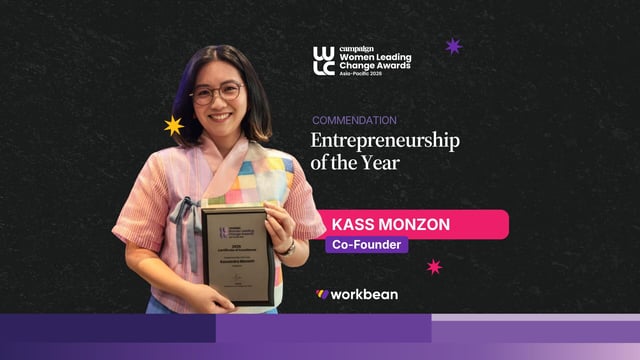
Workbean Co-Founder & CEO Kassandra Monzon earned a Commendation for Entrepreneurship of the Year at Campaign Asia-Pacific's Women Leading Change Awards (WLCA) Asia 2026. Here is how Workbean is reshaping employer branding in the Philippines.

Ready to uncover your employer brand’s unique voice? Let’s talk →
- Sitemap
- Reach out
- Project Inquiry
Join Our Team


- Singapore
160 Robinson Road, #14-04 Singapore Business Federation Centre, 068914 Singapore
- Philippines
Unit 4D, 134, Building Jupiter, Makati City, 1209 Metro Manila